0 m
Current work
Codewhale
A coding-agent runtime for real repositories, with terminal, web, and API surfaces around the same work.
codewhale.netShannon Labs
Home of Codewhale, an open-source coding agent that works across models, tools, and platforms. Codewhale is Shannon Labs’ first product and full-time focus.
The work
Open source · Any model · Your machine
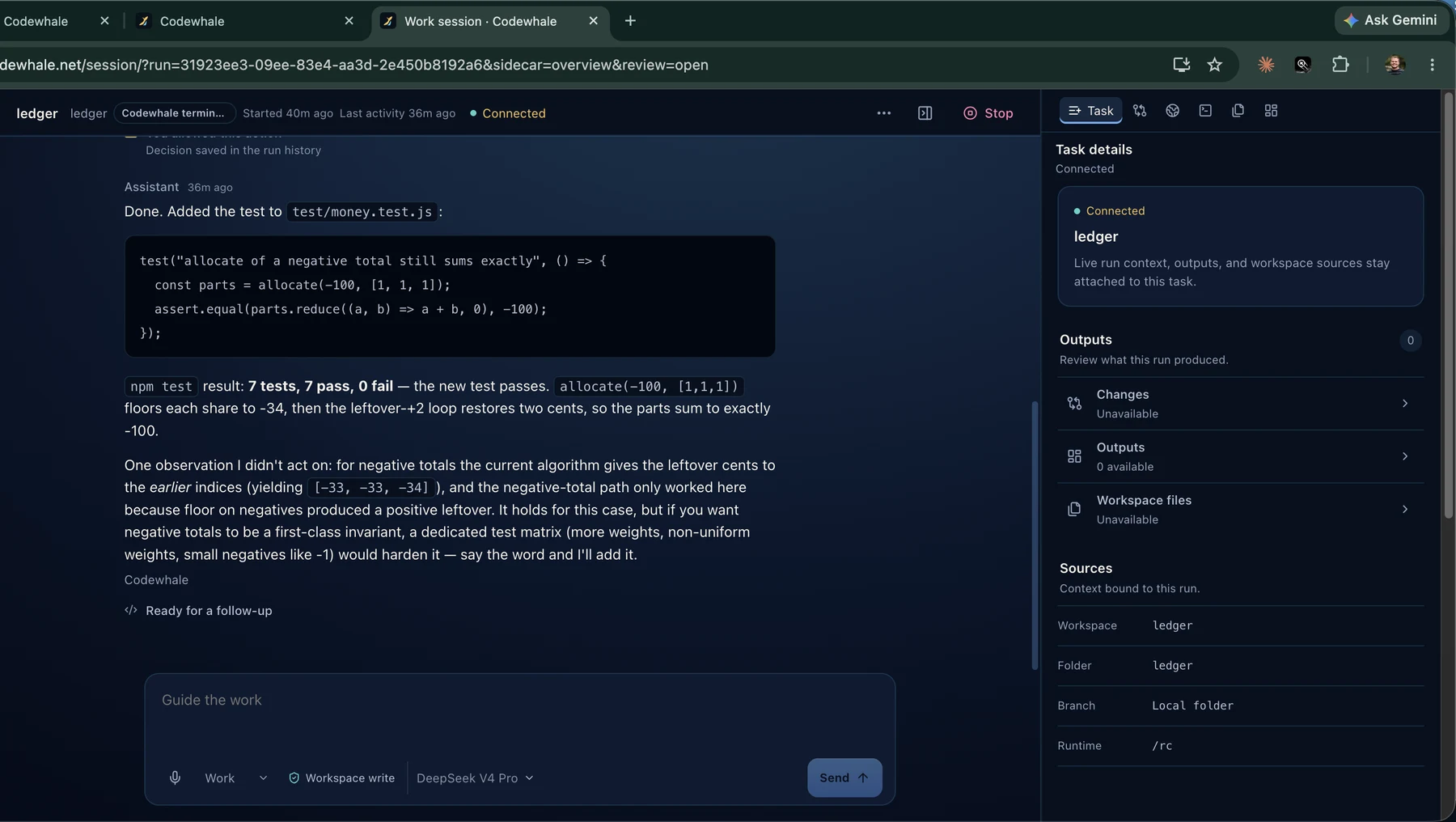
Give Codewhale a model and a task. It reads the repository, edits files, runs commands, checks the result, and stops when the job is done or it needs a decision from you.
The open-source runtime works in the terminal. The Codewhale app adds a browser and mobile surface for starting and supervising the same work, including sessions, approvals, connected computers, and projects.
Codewhale · work session
A name I did not pick
鲸鱼哥 Jīngyú gē
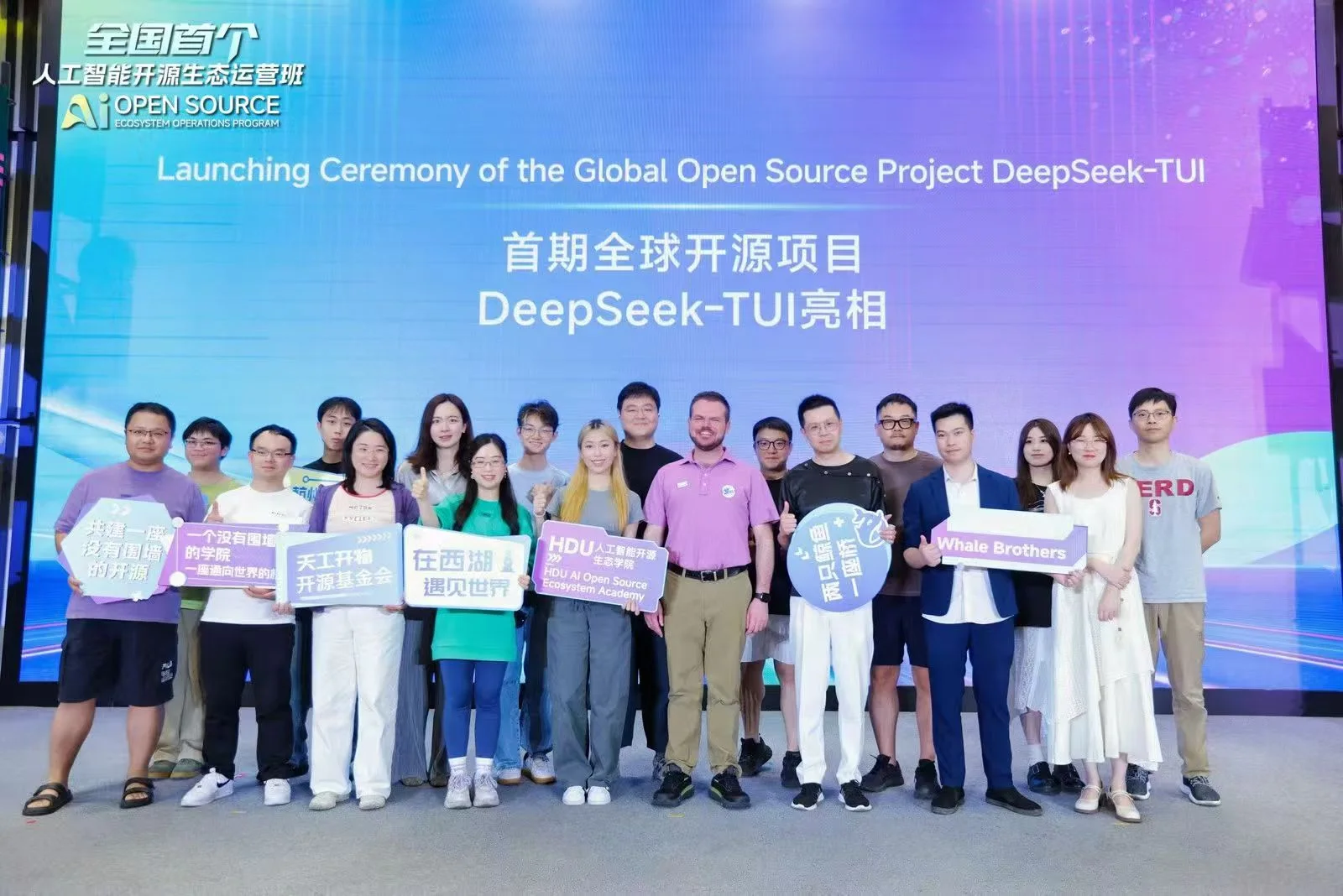
Codewhale began as an independent terminal project. Hunter opened a thread with “Hello, Whale Brothers,” and developers in China started calling him 鲸鱼哥—Brother Whale.
The project found an international open-source community before there was a company around it. Contributors became translators, testers, maintainers, advocates, and friends. Shannon Labs is building the next product layer without losing that origin.
Soundings
A sounding measures depth by making a noise and listening. The projects below form a practical lineage: each one supplied an idea or tool used by the next.
Current work
A coding-agent runtime for real repositories, with terminal, web, and API surfaces around the same work.
codewhale.netLong context
An MCP server that turns recursive-language-model analysis into tools an agent can call: search a large corpus, run code against it, and recursively query the material instead of forcing it into one prompt.
SourceEarlier harness
An earlier agent harness for recursive context handling. Its useful parts led to Aleph’s MCP surface and informed Codewhale’s approach to long-running work.
SourceInformation theory
Research on adaptive regularization and compression-based anomaly detection: using description length as a signal about what a system is learning or when data has changed.
SourceWhy Shannon Labs
Shannon Labs is named for Claude Shannon. Hunter’s great-grandfather, Dr. Ralph Bown, was vice president of research at Bell Labs during the same era. The current principle is straightforward: build systems people can inspect, run, question, and improve.
Useful work should be available to test and argue with.
A runnable system says more than a claim about one.
The founder
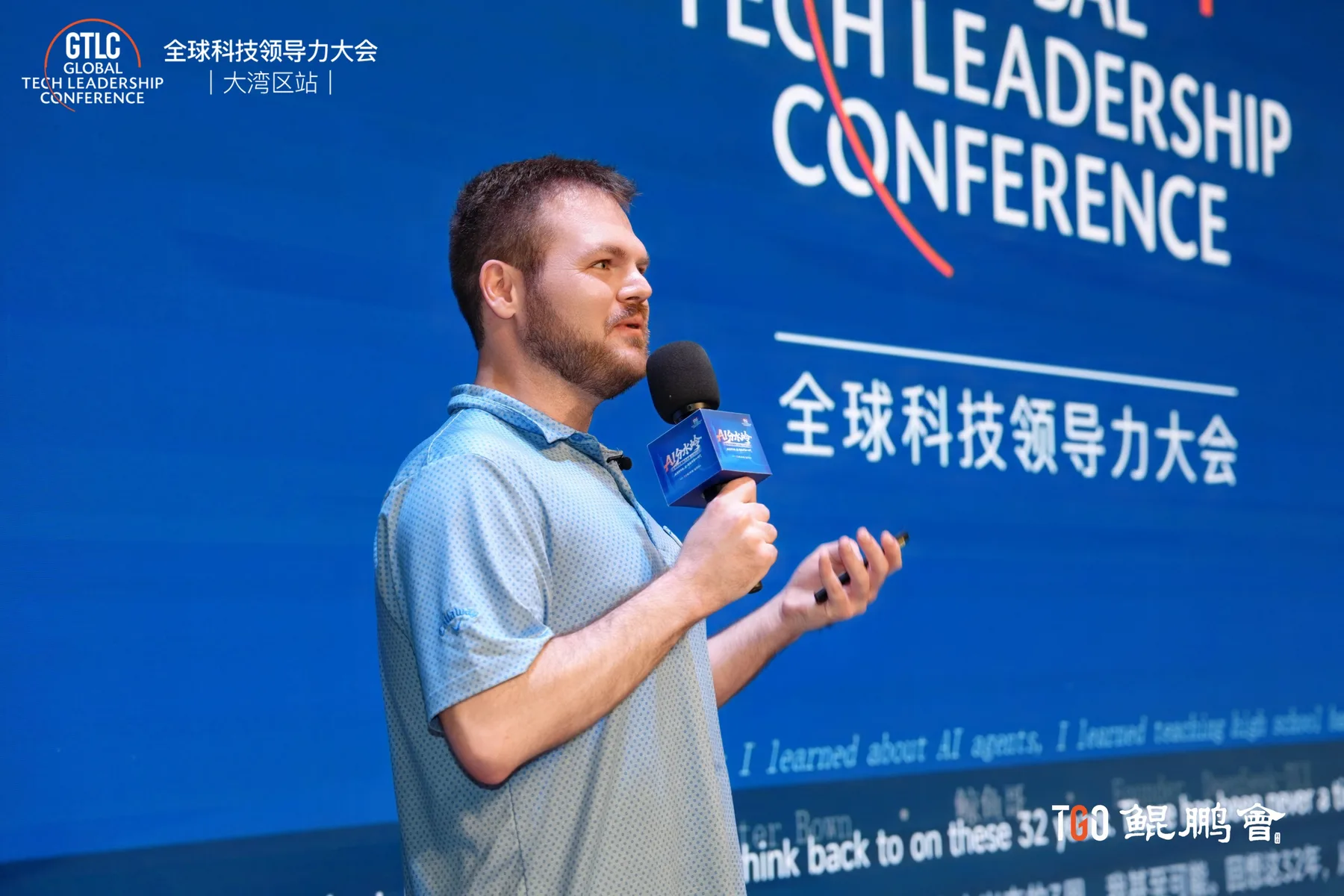
Hunter Bown’s path to software ran through music education and conducting, an MBA, and patent-law studies. AI-assisted development gave him a way to turn product ideas into working systems; Codewhale grew from an independent terminal agent into an international open-source project.
He now develops Codewhale full time through Shannon Labs, working in public with the contributors and users shaping the runtime and the app.
For investors
Shannon Labs is building the open-source runtime and the product layer around it. If you invest in developer tools, AI infrastructure, or agentic work, contact Hunter directly.
hunter@shannonlabs.dev